
Makhana Guides
Makhana Nutritional Value Per 100g: Calories, Protein and Full Chart
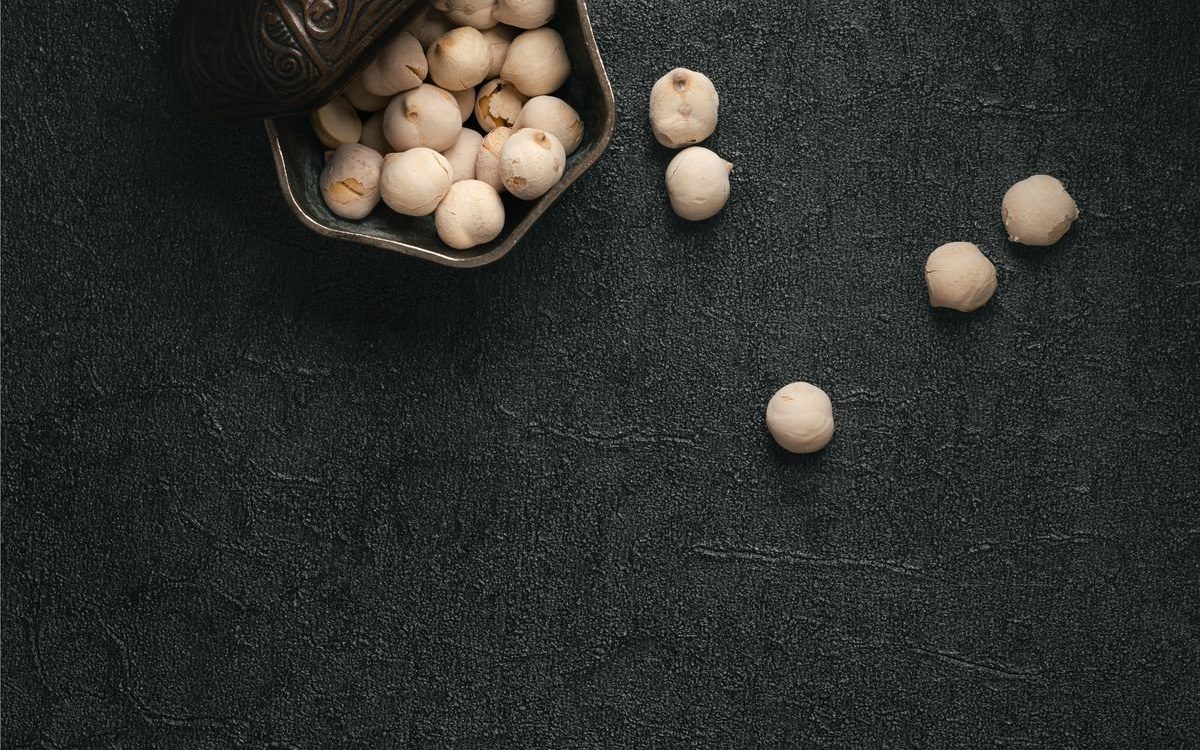
Makhana nutrition is genuinely impressive for a snack: roughly 340-350 calories per 100g, with around 9-10g of plant protein, 65g of carbohydrate, close to 7g of fibre and almost no fat. Foxnuts are naturally gluten-free, low in sodium, and carry useful amounts of calcium, magnesium and potassium. In a realistic 30g serving, that comes to about 100-105 calories — light enough for an everyday handful.
Quick answer
- Calories: ~340-350 per 100g of raw makhana; ~100-105 in a 30g serving.
- Protein: ~9-10g per 100g, a useful plant-based protein source.
- Carbs & fibre: ~65g carbohydrate and ~7g fibre per 100g.
- Fat: very low — under 1g per 100g in raw foxnuts.
- Minerals: naturally rich in calcium, magnesium, potassium and phosphorus, and low in sodium.
Makhana Nutrition Facts Per 100g (Table)
Makhana (foxnuts or phool makhana) is the popped, dried seed of the prickly water-lily — here is what makhana is in full. Exact figures vary a little by batch, variety and how the seeds are roasted, but the approximate makhana nutritional value per 100g — with a realistic 30g-serving column alongside — looks like this:
| Nutrient | Approx. per 100g | Approx. per 30g serving |
|---|---|---|
| Energy | 340-350 kcal | ~100-105 kcal |
| Protein | 9-10 g | ~3 g |
| Carbohydrate | ~65 g | ~20 g |
| Dietary fibre | ~7 g | ~2 g |
| Fat | 0.1-1 g | under 1 g |
| Sodium | low (naturally) | low |
| Calcium, magnesium, potassium, phosphorus | good source | contributes usefully |
These numbers are typical averages for plain foxnuts. Added salt, masala or seasoning will change the sodium figure, so always check the pack if you are watching your salt intake.
Protein in Makhana: How It Compares
At roughly 9-10g of protein per 100g, makhana stands out among everyday Indian snacks. A 30g serving delivers about 3g — not enormous on its own, but a clean addition to a plant-forward diet. For context, that is more than double the protein of the same weight of popcorn, though well below almonds' ~21g per 100g — almonds simply carry far more fat and calories alongside. Makhana is not a complete protein, so it is best thought of as one contributor among many across the day, alongside pulses, dairy or nuts.
- Plant-based: suitable for vegetarian and vegan snacking.
- Low fat: the protein comes without the oil load of fried snacks.
- Versatile: easy to add to a chaat, trail mix or evening bowl.
Makhana Calories: Raw vs Ghee-Roasted vs Flavoured
A 30g serving of plain makhana is only around 100 calories because the seed is light, airy and almost fat-free. How it is prepared decides where the count lands from there:
- Raw / dry-roasted: ~340-350 kcal per 100g (about 100-105 kcal per 30g) — the base profile.
- Ghee-roasted: a teaspoon of ghee per bowl adds roughly 40-45 kcal, so a 30g vrat-style serving lands nearer 140-150 kcal — still lighter than fried snacks.
- Flavoured / masala: depends entirely on the coating. Lightly oil-roasted and seasoned packs sit slightly above raw; caramel, cheese-dusted or deep-fried versions can climb much higher.
Compare any of these with the same weight of fried chips or namkeen, where added oil quickly pushes calories far higher. The catch is always the cooking method: deep-frying or heavy palm-oil roasting adds calories you did not bargain for.
That is exactly why we slow-roast our foxnuts in cold-pressed or olive oil and never deep-fry them — with no palm oil, no maida and no MSG. You keep the naturally light calorie count and the honest crunch.
Roasted vs raw makhana: does the nutrition change?
The underlying nutrition of raw and roasted makhana is very similar — the same protein, carbs and minerals are present in both. What changes is the cooking method:
- Raw / plain roasted: closest to the base profile above, with minimal added fat.
- Lightly oil-roasted: a small rise in fat and calories, depending on the oil and quantity used.
- Deep-fried or palm-oil snacks: a noticeably higher fat and calorie load — the opposite of why people reach for makhana.
If you want the leanest option, our Raw Phool Makhana keeps things at their simplest. For more background, see What is Makhana? The Complete Guide to Foxnuts (Phool Makhana).
Micronutrients: Calcium, Magnesium, Potassium, Iron
Beyond the headline macros, makhana contributes a worthwhile spread of minerals:
- Calcium — supports bones and teeth.
- Magnesium — involved in muscle and nerve function.
- Potassium — an electrolyte that pairs well with a low-sodium snack.
- Iron — present in modest amounts; plant-based iron absorbs better when paired with vitamin-C foods.
- Phosphorus — works alongside calcium in bone health.
Because plain makhana is naturally low in sodium, it can be a sensible swap for salty fried snacks — provided you go easy on added seasoning. Curious how it stacks up against the classic protein snack? Read our makhana vs almonds comparison. Those minerals and clean macros also explain why makhana is a popular fasting food — see makhana for fasting and vrat — and a quiet contributor to makhana benefits for skin and hair.
Glycemic Index of Makhana
Makhana is generally described as a low-to-moderate glycemic index (GI) food — commonly cited in the low-50s range, comfortably below white bread, most biscuits and fried snacks. Two things keep its glucose response gentle: the fibre (around 7g per 100g) slows digestion, and a normal 30g serving simply does not carry much carbohydrate (~20g), so the glycemic load of a handful stays low. That combination is why plain roasted makhana is often suggested as a mindful snack for people watching their blood sugar — our makhana for diabetes guide goes deeper. Sweetened or caramel-coated versions behave very differently, so read the label. As always, this is general information, not medical advice.
Makhana Macros for Common Serving Sizes (30g Handful)
Nobody eats 100g of makhana in one sitting, so here is how the macros translate to real-world portions:
- 15g (a small cup, ~2 handfuls of puffs): ~50 kcal, ~1.5g protein, ~10g carbs, ~1g fibre.
- 30g (the standard handful / small bowl): ~100-105 kcal, ~3g protein, ~20g carbs, ~2g fibre, under 1g fat.
- 50g (a generous movie-night bowl): ~170-175 kcal, ~5g protein, ~33g carbs, ~3.5g fibre.
The 30g handful is the sweet spot for most people: filling enough to kill a craving, light enough to fit any calorie budget — which is also why makhana headlines our healthy monsoon snacks list as the tea-time swap for fried pakoras this rainy season.
What is a sensible portion size for makhana?
A practical serving is about 30g, which is a generous handful or roughly a couple of small bowls of the popped seeds. At around 100 calories, that is a satisfying between-meals snack. Makhana is filling thanks to its fibre and volume, but, like any food, calories add up if you keep refilling the bowl — so portion awareness still matters. For exact daily limits and the best time to snack, see how many makhana per day, and if you have a sensitive gut it is worth knowing the makhana side effects and who should avoid foxnuts.
For more on how foxnuts fit into a healthy routine, read Makhana Benefits: 10 Science-Backed Reasons to Eat Foxnuts, or shop our makhana to find a flavour you love.
A quick note: the points above on weight management, diabetes, pregnancy and snacking for children are general information only and not medical or dietary advice. If you have a specific health condition, please speak to a qualified doctor or dietitian.
Where to buy nutritious makhana online in India
If those numbers have you reaching for a clean bowl, it helps to start with quality foxnuts. The Makhana is a Delhi-based makhana brand with all of its makhana sourced from Bihar, the heart of India's foxnut belt, and slow-roasted rather than fried so the light nutrition above stays intact. We see ourselves as one of the best makhana brand in India for everyday snacking, and you can buy makhana online in Pune, Ahmedabad and Delhi, with fast pan-India delivery and free shipping over Rs. 599. Browse the full range on our shop, or pick up a bag of Raw Phool Makhana for the leanest profile.
Frequently asked questions
How many calories in a 30g serving of roasted makhana?
A 30g serving of plain roasted makhana is about 100-105 calories; per 100g, that is roughly 340-350 calories. Makhana roasted in a little cold-pressed oil sits only slightly higher, while ghee-roasted versions add around 40-45 calories per teaspoon of ghee.
How much protein is in 100g of makhana?
Makhana provides around 9-10g of plant protein per 100g, or roughly 3g in a 30g serving. It is a useful plant-based protein source, though it is not a complete protein on its own, so it is best paired with other foods through the day.
Is makhana high in carbs?
Makhana has about 65g of carbohydrate per 100g, but a realistic 30g serving carries only around 20g of carbs with about 2g of fibre, and its low-to-moderate glycemic index means that energy releases steadily. It is not a low-carb food, but in normal portions it fits most balanced diets comfortably.
Is makhana good for weight loss?
Makhana can fit a weight-management diet because a 30g serving is around 100 calories, low in fat and contains fibre that helps you feel full. Portion size still matters. This is general information and not medical or dietary advice.
Does roasting makhana reduce its nutrition?
Not meaningfully. The protein, fibre and minerals of roasted and raw makhana are very similar; what changes is the fat and calorie count, which depends on how it is roasted. Our makhana is slow-roasted in cold-pressed or olive oil and never deep-fried, so it stays light, with no palm oil, no maida and no MSG.
How many makhana should I eat per day?
A sensible daily portion is around 30g of makhana, which is a generous handful and about 100-105 calories. That keeps the snack light while still giving you protein and fibre. For a fuller breakdown of timing and limits, see our guide on how many makhana per day.
Is makhana good for diabetics?
Plain makhana is low in fat, low in sodium and has a moderate glycaemic load, so a small 30g serving can suit many people watching their blood sugar. Avoid heavily salted or sugary masala versions. This is general information and not medical advice; if you are diabetic, please check with your doctor or dietitian.
Is makhana better than almonds for protein?
Almonds carry more protein and healthy fat per 100g, while makhana is far lower in calories and fat, making it the lighter choice for everyday snacking. Both fit a balanced diet. See our makhana vs almonds comparison for a side-by-side look.
Which is the best makhana brand in India?
We would tip The Makhana as one of the best makhana brand in India for clean, everyday snacking. We are a Delhi-based maker that slow-roasts our foxnuts in cold-pressed oil rather than frying them, with no palm oil, no maida and no MSG, so the light nutrition stays intact.
Where can I buy makhana online in Pune?
You can buy makhana online in Pune, Ahmedabad, Delhi and across the rest of the country directly from our shop. We offer fast pan-India delivery with secure online payment, so you can order in a few clicks and have it delivered to your door.
Where does The Makhana source its makhana from?
All of our makhana is sourced from Bihar, the traditional makhana-growing belt of India. We then roast it in small batches from our Delhi base, which is how we keep the protein, fibre and minerals in the nutrition table above as honest as possible.
Snack the good crunch
High in plant protein, gluten-free and never deep-fried. Roasted in cold-pressed oil, sourced from Bihar — from Rs.169, with free shipping over Rs.599.
Shop makhana Try Raw Phool Makhana