
Makhana & Fitness
Is Makhana a Good Source of Protein? The Honest Gym & Fat-Loss Guide (2026)
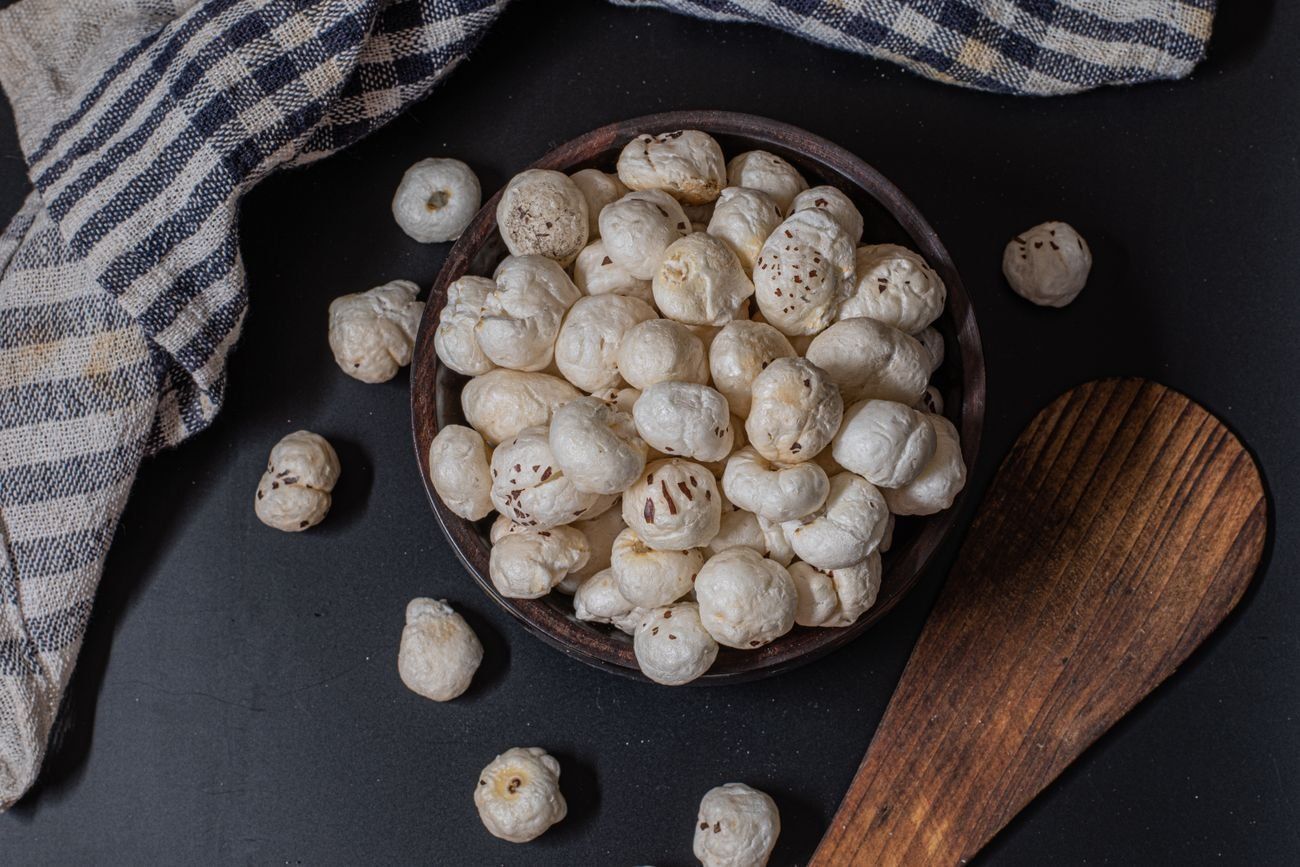
Ask a gym crowd whether makhana is a good source of protein and you'll get two wrong answers: brands calling it a "protein powerhouse", and sceptics dismissing it entirely. The honest truth sits in between, and it is more useful than either. Makhana carries about 9.7g of protein per 100g raw and around 10.5g once roasted — a moderate amount — but it delivers that protein with almost no fat, giving it the best protein-to-fat ratio of any popular Indian snack. So is makhana a good source of protein? As a supporting, low-fat, vegetarian snack around your workouts and fasts, yes. As your main protein source, no. This guide gives you the exact numbers, the comparison table nobody else builds, and how to use it around the gym and Sawan vrat.
The quick answer — makhana's protein in 30 seconds
Makhana is a moderate, low-fat plant protein: ~9.7g raw / ~10.5g roasted per 100g, but only ~3g in a realistic 30g handful.
- Best protein-to-fat ratio of any Indian snack — ~10g protein at ~0.1–0.5g fat.
- Not a complete protein and not a primary source — pair it, don't rely on it.
- Great for the gym as a light snack, weak as a standalone post-workout.
- Vrat-legal & vegetarian — a rare fasting-friendly protein snack.
How much protein is in makhana, exactly?
This is the question people actually type — how much protein in makhana — so let's answer it with real numbers rather than hype.
Per 100g (raw vs roasted) — the macro table
Roasting drives off moisture, so it slightly concentrates the macros. Here is the honest makhana protein per 100g picture alongside the rest of the profile.
| Per 100g | Protein | Fat | Carbs | Calories |
|---|---|---|---|---|
| Raw makhana | ~9.7g | ~0.1g | ~77g | ~347 kcal |
| Roasted makhana | ~10.5g | ~0.5g | ~76g | ~350 kcal |
The stand-out number is fat: near zero. That is why makhana beats almost every snack on protein delivered per gram of fat, and why it fits both fat-loss and clean-eating plans. For the full micronutrient breakdown — magnesium, potassium, calcium — see our dedicated makhana nutrition guide.
Per realistic serving — why the handful matters
Nobody eats 100g of makhana in one sitting; it is astonishingly bulky. A realistic serving is 25–30g, which is one to two big handfuls and roughly 3g of protein. That is the number to keep in your head. It quietly explains why makhana can't be your protein plan on its own — you'd need to eat an unfeasible amount — and why pairing is the whole game.
Is it a complete protein?
No. Like most plant foods, makhana is limited in some essential amino acids (notably lysine), so on its own it is an incomplete protein. The fix is simple and Indian kitchens have done it forever: combine it with curd, milk, peanuts or dal and the amino acid profiles complement each other. Eaten this way, makhana may help you hit a daily protein target as part of a varied diet — general nutrition information, not a medical claim.
Makhana vs egg, paneer, chicken, almonds, chana & whey
Here is the table competitors dodge. Most only compare makhana to other plant snacks; readers actually search makhana protein vs egg. The column that matters is protein per realistic serving, not per 100g.
| Food | Protein /100g | Per real serving | Fat /100g | Type |
|---|---|---|---|---|
| Roasted makhana | ~10.5g | ~3g (30g) | ~0.5g | Veg, incomplete |
| Egg | ~13g | ~6g (1 egg) | ~11g | Complete |
| Paneer | ~18g | ~9g (50g) | ~20g | Veg, complete |
| Chicken breast | ~31g | ~31g (100g) | ~3.6g | Complete |
| Almonds | ~21g | ~6g (28g) | ~49g | Veg, incomplete |
| Roasted chana | ~19g | ~6g (30g) | ~6g | Veg, incomplete |
| Whey (1 scoop) | ~80g | ~24g (30g) | ~5g | Complete |
Where makhana wins — and where it loses
On raw protein per serving, egg, paneer, chicken and whey all beat makhana — be honest about that. But look at the fat column. Makhana delivers its protein at ~0.5g fat, versus 49g for almonds and 20g for paneer. On protein-to-fat and protein-to-calorie ratio for a crunchy snack, makhana is unbeaten. Its weakness is total protein density; the fix is to stack it. Curious how it stacks against nuts specifically? Our makhana vs almonds comparison goes deeper on that trade-off.
Makhana for the gym: pre-workout, post-workout & recovery
This is the section every competitor skips. If you're searching makhana for gym or makhana pre workout post workout, here's the practical playbook.
Pre-workout — light carbs, steady energy
A 30g handful 30–45 minutes before training is a smart pre-workout snack: it delivers easy, low-GI carbohydrates for steady energy and a little protein, without the heaviness of a full meal. For timing across the whole day, see our best time to eat makhana guide.
Post-workout — why makhana alone won't build muscle
Here's the honest bit: makhana alone will not drive muscle growth. Hypertrophy needs roughly 20g of protein in a recovery window, and 30g of makhana gives about 3g. It is a snack, not a shake. The fix is to protein-stack it — turn makhana into the crunchy base of a fuller recovery snack.
3 protein-stacking combos (with quantities)
- Makhana + curd bowl: 40g roasted makhana + 150g curd + 15g peanuts ≈ 12–14g protein.
- Makhana + milk (pre-bed): 30g makhana + 250ml milk ≈ 11g protein, plus slow casein overnight.
- Trail-mix stack: 30g makhana + 20g roasted chana + 15g peanuts ≈ 10g protein in one portable bag.
Weight loss vs weight gain — same snack, two strategies
For fat loss, makhana's high-satiety, low-fat, low-calorie profile is the whole point: swap fried namkeen for a measured 30g portion and you cut the day's most calorie-dense habit while still getting protein and fibre. Our makhana for weight loss guide covers portions in detail. For a lean bulk, flip it: ghee-roast the makhana, add warm milk and dry fruits, and the same snack becomes a calorie-dense, protein-supporting mass gainer. One snack, two dials — portion and pairing.
4 high-protein makhana recipes (with grams & protein per serve)
- Peri-peri protein makhana: dry-roast 50g makhana on low for 6–8 min, toss with 5g olive oil, peri-peri spice & a pinch of sendha namak. ~5g protein.
- Makhana–peanut fitness trail mix: 30g roasted makhana + 20g roasted peanuts + 10g pumpkin seeds. ~11g protein.
- Makhana raita bowl: 30g crushed roasted makhana stirred into 150g curd with jeera. ~9g protein.
- Pre-bed makhana + milk: 25g makhana simmered 3 min in 250ml milk, light cardamom. ~10g protein.
High-protein makhana for Sawan & vrat fasting (2026)
With Sawan/Shravan beginning around 30 July 2026, this matters now. Makhana is one of the few vrat-legal, satvik foods that still adds plant protein, making it a genuine find for anyone trying to keep protein up on fasting days. Because it is low-protein solo, pair it where your fast allows — a fasting-friendly stack is 30g makhana + 200g curd + a few soaked almonds, lifting the total toward a proper protein snack while staying falahari. It's the same logic that makes foxnuts a monsoon staple in our healthy monsoon snacks roundup.
A chef co-founder's take — roasting for protein density
Our chef co-founder puts it plainly: the protein in makhana is already there in the seed — your job is not to waste it. We roast our foxnuts in cold-pressed olive oil, low and slow, so they crunch without soaking up fat. The honest warning he insists we print: deep-frying and heavy flavour-coating destroy the protein-to-fat advantage that makes makhana worth eating in the first place. A fried, oil-drenched, sugar-dusted foxnut is just a chip. Keep it oil-light and lightly seasoned, and you keep the lean, high-ratio snack the numbers promise.
Frequently asked questions
Is makhana high in protein?
Makhana carries roughly 9.7g of protein per 100g raw and about 10.5g per 100g roasted, which is a moderate, not high, amount. Its real strength is the protein-to-fat ratio: you get that 10g of plant protein at barely 0.1 to 0.5g of fat, the leanest profile of any popular Indian snack. A realistic 30g handful gives about 3g of protein, so treat it as a supporting snack rather than a primary protein source.
How much protein is in 100g of makhana?
About 9.7g of protein per 100g of raw makhana and roughly 10.5g per 100g once roasted, because roasting removes moisture and concentrates the macros slightly. A single 30g serving, which is one to two small handfuls, works out to around 3g of protein.
Makhana vs egg protein: which is better?
Per 100g the numbers look close, makhana around 10.5g and egg around 13g, but per realistic serving an egg wins easily: one 50g egg gives about 6g of complete protein while a 30g makhana handful gives about 3g of plant protein. The egg is a complete protein; makhana is not. Makhana's advantage is that it is vegetarian, low-fat and shelf-stable, so the smartest move is to use both together.
Can makhana replace whey protein?
No. A whey scoop delivers 20 to 25g of fast, complete protein, while a full 100g bag of makhana gives about 10.5g of incomplete plant protein. Makhana cannot replace whey for muscle building, but it makes an excellent clean, low-fat snack alongside your protein routine, especially on vegetarian or fasting days when a shake is not an option.
Is roasted makhana good for the gym and post-workout?
Roasted makhana is a good light pre-workout snack because it gives steady low-GI carbohydrates without sitting heavy. Post-workout it should not go solo, since 30g only carries about 3g of protein, well below the 20g plus most people want for recovery. Pair it, for example 40g makhana with 150g curd and 15g peanuts, to build a fuller recovery snack of roughly 12 to 14g of protein.
Is makhana protein good for vegetarians and during Sawan vrat?
Yes. Makhana is one of the few vrat-legal, satvik snacks that still adds plant protein, so it is genuinely useful for vegetarians and for Sawan or Navratri fasting. Because it is low in protein on its own, pair it with curd, milk or peanuts where the fast allows to lift the total closer to a proper protein snack.
Clean, high-ratio protein snacking
Roasted in cold-pressed olive oil, never deep-fried — so the lean protein-to-fat advantage stays intact. Grab the 3-pack combo (240g, ₹649) for gym-bag stocking, and use code MAKHANA10. Free shipping over ₹599.
Shop the range Get the 3-pack combo